



When Do You Need an Insurance Dispute Resolution Expert?
Has your insurance claim reached a point where every conversation feels stuck?
Maybe the insurance company’s estimate looks too low. Maybe your property damage claim keeps getting delayed. Or maybe both sides disagree on the real value of the loss. That is often when an insurance dispute resolution expert becomes important.
When a claim dispute moves beyond basic paperwork, property owners need clear guidance, strong documentation, and a fair process for resolving disagreements.
What an Insurance Umpire Actually Does
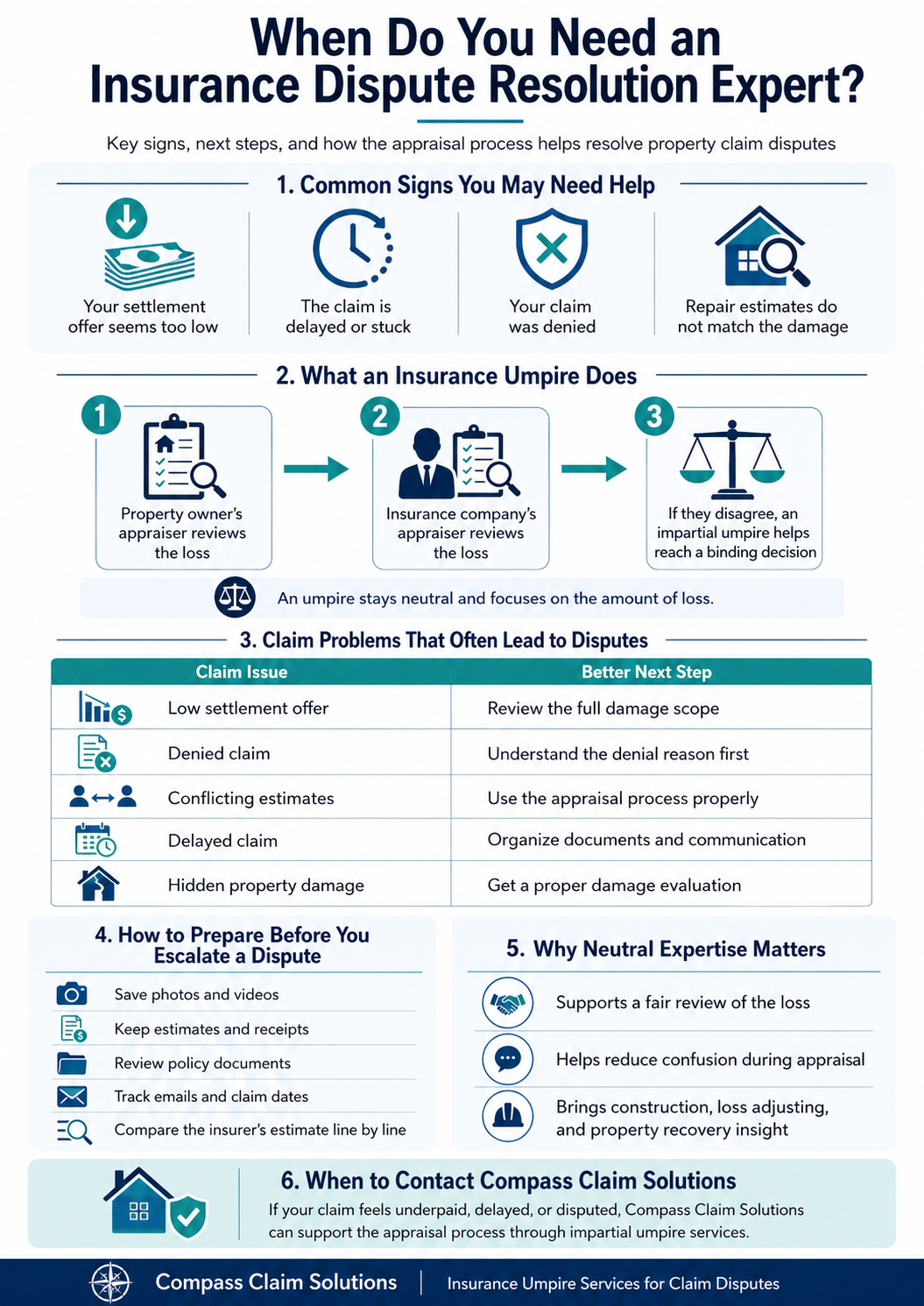
An insurance umpire does not work like a regular claims representative. The umpire enters the process when two appraisers disagree about the value of a property loss. One appraiser usually represents the property owner’s side. The other represents the insurance company’s side.
Each appraiser reviews the claim, compares notes, and tries to agree on the value. However, when they cannot reach an agreement, an impartial umpire can help resolve the difference. Compass Claim Solutions explains that this process can lead to a binding decision when the two appraisers remain divided.
This matters because claim disputes often involve technical details. Construction costs, property recovery needs, loss adjusting, repair scope, and valuation all matter. A qualified umpire should understand these details before making a decision.
More importantly, an umpire should remain neutral. The goal is not to fight for one side. The goal is to assess the loss fairly and help the appraisal process reach a resolution.
Claim Disputes Usually Start When the Damage Value Does Not Match
A property claim can look simple at first. Damage happens, the policyholder files a claim, and the insurance company reviews it. However, the process often becomes harder when both sides see the damage differently.
The insurance company may value the loss one way. The property owner may see missing items, incomplete repair estimates, or damage that needs deeper review. As a result, the claim can stall. In many cases, the issue is not only about money. It is about proof, scope, construction details, policy language, and the full cost of restoring the property.
That is where the appraisal process and insurance umpire services can help. Compass Claim Solutions provides insurance umpire services for claim disputes where appraisers cannot agree. Its role connects directly with alternative dispute resolution, where an impartial professional helps move the claim toward a fair decision.
Signs You May Need an Insurance Dispute Resolution Expert
You may need a resolution expert when the claim no longer moves forward through normal discussion. This often happens after a storm damage claim, fire damage claim, water damage claim, plumbing leak claim, or commercial property claim.
- One warning sign is a settlement offer that does not match the damage you can see.
- The repair estimate leaves out important work. For example, the estimate may cover surface repairs but miss hidden moisture, structural concerns, code-related work, or related damage.
- A denied claim can also raise concerns. Insurance companies may deny claims because of policy exclusions, missed deadlines, limited evidence, or disputes over the claim’s validity. In that situation, policyholders need to understand the reason for the decision before they respond.
A dispute does not always mean someone acted unfairly. Sometimes, both sides simply disagree on the loss amount. However, once the disagreement affects the settlement, the policyholder should take the next step carefully.
Why Neutrality Matters in the Appraisal Process
A fair insurance claim settlement depends on a balanced review. That becomes difficult when both sides strongly disagree. The insurance company may rely on its estimate. The property owner may rely on contractor pricing, photos, and repair needs. At the same time, both appraisers may defend different valuations.
An impartial umpire gives the process structure. The umpire reviews the competing positions, evaluates the amount of loss, and helps move both sides toward resolution. Compass Claim Solutions notes that umpires are independent appraisal professionals with experience in loss adjusting, construction, and property recovery.
That combination matters. A property damage claim is not just paperwork. It often involves materials, labor, building conditions, cause of loss, and repair standards. Therefore, the person helping resolve the dispute should understand how property damage actually affects the cost of recovery.
In many cases, appointing an umpire early can also support a smoother process. It gives both appraisers a clear path if they cannot agree.
Claim Problems That Often Need More Than Basic Negotiation
Some claim issues can be solved with a clearer estimate or missing documents. However, others need a deeper review. When the claim involves major property damage, the settlement can depend on details that most policyholders may not know how to prove.
A consultant or dispute professional may help review the insurer’s position, gather stronger documentation, and organize the claim response. Claims consultants often support policyholders by reviewing denials, collecting evidence, preparing appeals, and negotiating with insurers.
The same logic applies when a claim enters appraisal. Strong documentation matters. Clear repair estimates matter. Photos, contractor reports, invoices, expert opinions, and policy details all help create a better picture of the loss.
| Claim Issue | Why It Creates a Dispute | Better Next Step |
|---|---|---|
| Low settlement offer | The estimate may miss damage or repair costs | Review the full damage scope |
| Denied claim | Coverage, deadlines, or evidence may be questioned | Understand the denial reason first |
| Conflicting estimates | Appraisers may value the loss differently | Use the appraisal process properly |
| Delayed claim | Missing details may slow the process | Organize documents and communication |
| Hidden property damage | Some issues appear after inspection | Get a proper damage evaluation |
Because of this, property owners should avoid rushing into a settlement when key facts remain unclear.
How to Prepare Before You Escalate a Claim Dispute
Before you involve a dispute resolution expert, gather the details that support your position. Do not rely only on memory. Instead, create a clear claim file that shows what happened, what damage exists, and why the settlement may not reflect the full loss.
- Start with photos and videos: Then save emails, letters, inspection notes, repair estimates, contractor reports, receipts, and policy documents.
- Write down important dates: Include when the damage happened, when you filed the claim, when inspections occurred, and when the insurance company responded.
- Review the insurance company’s estimate line by line: Look for missing rooms, materials, labor, cleanup, code items, or damage connected to the original loss. If something seems unclear, ask for an explanation in writing.
This step does not guarantee a different outcome. However, it can support a stronger appraisal, appeal, or claim review. More importantly, it helps you avoid making decisions based on incomplete information.
When Compass Claim Solutions Can Support the Process
Compass Claim Solutions helps property owners and appraisers when insurance claims reach a disputed point. Its umpire services focus on the appraisal process, especially when two appraisers cannot agree on the value of a loss.
This type of support can help homeowners, commercial property owners, HOAs, and condo associations deal with claim disagreements more clearly. Instead of letting the dispute sit unresolved, the appraisal process creates a structured path for review.
An insurance dispute resolution expert can also help readers understand when the issue requires more than another phone call to the insurance company. Sometimes, the next step involves better documentation. Other times, it involves appraisers, an umpire, and a binding decision.
That matters because property owners often feel pressured during claim disputes. Clear guidance can reduce confusion and help them make better decisions before accepting a settlement.
FAQs
1. What does an insurance umpire do?
An insurance umpire helps resolve claim disputes during the appraisal process. The umpire becomes involved when the property owner’s appraiser and the insurance company’s appraiser cannot agree. The umpire reviews the loss details and may help make a binding decision.
2. When should I consider an appraisal for an insurance claim?
You may consider an appraisal when both sides disagree on the amount of loss. This often happens after underpaid claims, disputed estimates, or conflicting repair scopes. Review your policy first because appraisal terms can vary.
3. Is an insurance umpire the same as a public adjuster?
No, they serve different roles. A public adjuster represents the policyholder during the claim process. An insurance umpire acts as an impartial professional during appraisal when appraisers cannot agree.
4. Can an umpire help with a denied claim?
An umpire usually helps with disputes about the amount of loss, not every denial issue. If the dispute involves coverage, policy exclusions, or missed deadlines, the path may differ. Policyholders should first understand why the claim was denied.
5. What documents should I keep during a claim dispute?
Keep photos, videos, estimates, inspection reports, policy documents, emails, and letters. Also, save receipts, contractor notes, and repair recommendations. These records can help show the full scope of the property damage.
6. Does hiring a dispute expert guarantee a higher payout?
No professional should guarantee a higher insurance payout. However, better documentation, proper valuation, and a structured appraisal process may help support a fair review. The goal is to pursue a fair claim outcome based on the evidence.
Conclusion
You may need an insurance dispute resolution expert when your claim feels stuck, underpaid, denied, or disputed. The right support can help you understand the process, organize your evidence, and avoid rushed decisions.
More importantly, it can give the claim a clearer path when both sides disagree on the value of the loss. Compass Claim Solutions supports property owners and appraisers through impartial insurance umpire services designed for claim disputes.
If your settlement does not reflect the damage, contact Compass Claim Solutions to discuss your claim before accepting the final offer.