



Tampa Insurance Claim Help: 7 Steps After Property Damage
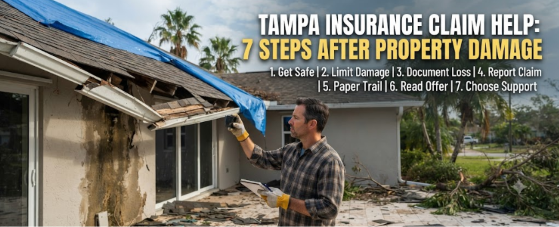
The storm passes in a few hours, but the claim can drag on for a long time. What you do first decides how much of that weight you carry.
When property damage hits in Tampa, the best first moves are simple: get safe, stop more damage, document the loss, and report the claim. Those early choices often set the tone for everything that follows.
This guide covers seven steps in the order most people need them, from the first hour to the final settlement conversation. It shows when handling a claim alone makes sense and when Tampa insurance claim help from a professional can take real weight off your shoulders. Each step is practical and easy to follow, even on a stressful day.
The Seven Steps at a Glance
|
Step |
What to Do |
Why It Matters |
|
1. Get safe |
Leave unsafe areas and call emergency services if needed |
People matter more than property |
|
2. Limit the damage |
Make reasonable temporary repairs | Many policies expect you to protect the property |
| 3. Document the loss | Take photos, video, and notes |
Evidence supports every part of the claim |
|
4. Report the claim |
Read your policy and notify your insurer | This starts the official process |
| 5. Keep a paper trail | Save receipts, estimates, and messages |
Clear records prevent confusion later |
|
6. Read the offer |
Compare it with your own estimates | You can spot missing items |
| 7. Choose your support | Handle it yourself or bring in a public adjuster |
The right answer depends on the claim |
Step 1: Get to Safety
Safety comes before anything else, including photos and phone calls. If you see fire, rising water, structural cracks, or exposed wiring, leave the building and call emergency services. Wait for the all-clear before going back inside. Belongings can be replaced down the road, but you and your family cannot.
Step 2: Stop the Damage From Spreading
Once everyone is safe, take reasonable steps to keep the damage from growing. Cover a broken roof with a tarp, shut off the water to a leaking pipe, or board up shattered windows. Many policies expect this kind of protection, and some may cover the cost. Keep every receipt from temporary repairs so you can submit them with the claim.
Step 3: Document Everything
Strong records give your claim a solid foundation from the very start. Take photos and video before you clean up or repair anything.
- Capture wide shots of each room and close-ups of every damaged item.
- Record a slow walkthrough video while describing what you see.
- List damaged belongings with their age, brand, and estimated value.
- Write down the date, the time, and the likely cause of the damage.
Step 4: Read Your Policy and Report the Claim
Read your policy to learn what it covers, what your deductible is, and which exclusions apply. Wind, flood, and water damage can be handled differently from one policy to the next, so the fine print matters. Report the loss to your insurance company quickly, since policies and Florida law set deadlines. Ask for a claim number and the adjuster’s name. Remember that the adjuster your insurer sends works for the insurance company, and their interests may not always match yours.
Step 5: Keep a Paper Trail
Create one folder for everything related to the claim. Save emails, letters, estimates, and receipts for temporary housing or emergency repairs if your policy may cover them. Write down the date, time, and name of each person you speak with on the phone. Written repair estimates from licensed contractors give you something solid to compare against the insurer’s figures.
Step 6: Read the Offer Closely
When the insurance company sends its estimate, set it beside your photos, lists, and contractor quotes. Look for missing rooms, undervalued items, or repairs that seem too limited. A first offer is not always the final one, and you are free to ask questions or request a review. A big gap between the offer and what contractors quote deserves a closer look.
Step 7: Decide How Much Help You Want
A public adjuster represents the policyholder instead of the insurance company. Plenty of claims never need one, and handling yours directly is a reasonable choice.
Going it alone tends to work when:
- The damage is minor, clearly covered, and the offer matches your own estimates.
- You have the time to manage paperwork, calls, and follow-ups.
Getting Tampa insurance claim help makes sense when:
- The loss is large, such as major storm, fire, or flood damage.
- The offer sits far below your contractor quotes.
- The claim has stalled or been denied and the next move is unclear.
- Your time and energy are already stretched thin by the recovery.
Compass Claim Solutions: A Partner in Your Corner
Insurance claims come with fine print, red tape, and long waits. The team has more than 10 years of specialized experience and works alongside homeowners, business owners, condo associations, and commercial property owners across Greater Tampa. The partnership covers the whole process: identifying every detail of the loss, valuing the damage, preparing the paperwork, and negotiating on your behalf.
Hurricanes, floods, plumbing leaks, fire, wind, mold, lightning, theft, and vandalism are all situations the team handles. A past settlement is not always the end of the road, since many policyholders can revisit one and the team can re-open a claim to look for money you may be owed.
What a Public Adjuster Costs in Florida
Compass Claim Solutions works on contingency: you pay a percentage of what is recovered, and nothing if nothing is recovered. Florida law caps the fee at 10% of the settlement for disaster claims filed within the first year, so the most you could pay is clear before you start.
The fee comes out of the settlement and never out of your pocket up front, and most Florida homeowners pay less than the cap. Weigh that cost against the hours you would spend managing the claim yourself.
Final Thoughts
Property damage is draining, but a clear plan keeps the claim from feeling like a second disaster. Stay safe, protect the property, document the loss, report it, keep records, and read every offer closely. Some claims are simple enough to handle alone, and bigger or disputed ones may call for extra expertise.
If you would like to talk through your options, Compass Claim Solutions offers a free consultation at (352) 502-5928. Reaching out for Tampa insurance claim help early gives you more room to make good decisions about what comes next.