

Tampa Bay Public Adjuster: The Ally Your Insurance Company Hopes You Never Call
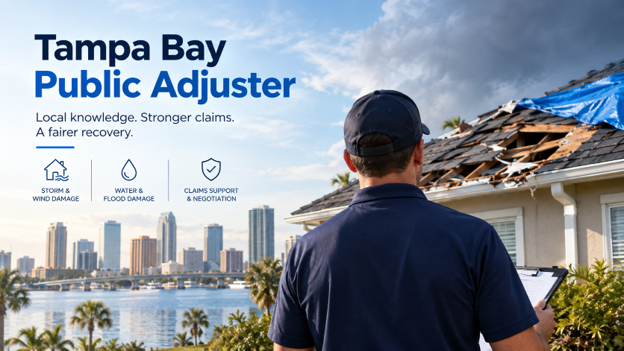
Your insurance company already has an adjuster working the numbers in their favor. It’s time you had someone working the numbers in your favor.
That’s the honest starting point for anyone in Hillsborough, Pinellas, Pasco, or the counties around them staring at a claim that feels smaller than the damage sitting in front of them. A hurricane doesn’t pause at a county line to check which insurer it’s dealing with, and the help you bring in shouldn’t be limited that way either.
A Tampa Bay public adjuster works across the whole region for exactly this reason, standing beside homeowners and business owners rather than across the table from them.
Why Storms Don’t Read City Limit Signs
Summer in this part of Florida means thunderstorms that show up almost on schedule, plus a hurricane season that can touch several communities in a single pass. Wind gusts strip roofs, rain finds its way through gaps nobody knew existed, and lightning does damage that isn’t always obvious until the lights start flickering weeks later.
Then there’s the quieter threat: humidity. A slow leak behind a wall turns into a mold problem faster here than it would almost anywhere else, and older plumbing throughout the region adds its own steady stream of water damage claims. None of this stays inside one zip code, so the people helping you recover from it shouldn’t be boxed into one either.
What Falls Under a Public Adjuster’s Watch
Working with a Tampa Bay public adjuster generally means one person handling the full range of what Florida weather and bad luck can throw at a property. The claims typically include:
- Hurricane and tropical storm damage
- Flood damage
- Plumbing leaks and water damage
- Fire damage
- Wind and storm damage
- Mold damage
- Lightning damage
- Theft and vandalism
A free consultation usually starts things off, where your policy and the damage get reviewed honestly, including a straight answer on whether bringing in outside help even makes sense for your situation. From there it moves into documenting the property, reading the policy closely, and pushing back on the insurance company directly on your behalf.
Wind, Water, and Everything In Between
Not every kind of storm damage lives under the same line of your policy, which is exactly where a lot of claims go sideways. A roof torn open by hurricane-force wind usually falls under a standard homeowners policy. Flood damage often sits under a separate flood policy across much of Florida, so knowing which coverage actually applies matters before anyone assumes something is included or left out.
A burst pipe or a plumbing failure gets treated differently again, filed under water damage language instead of storm or flood terms. Someone needs to figure out which bucket your loss belongs in and build the claim around that, instead of letting the insurance company make that call on its own.
How Compass Claim Solutions Partners With Homeowners Across the Region
Working across several communities at once means dealing with different city offices, different permitting rules, and a different set of local contractors depending on where the property sits. An adjuster who covers this ground regularly starts to recognize the patterns, and that familiarity tends to smooth out the documentation and negotiation stages no matter which town the claim comes from.
There’s a bigger-picture benefit too. When one storm hits several communities at once, seeing how insurers respond in one area often predicts how they’ll respond in the next. Compass Claim Solutions treats that regional view as part of the job, not an afterthought, which is what a real partnership with a policyholder should look like.
Regional Reach vs. Local Roots
Both approaches bring something real to the table, and it’s worth weighing them honestly instead of assuming one wins by default.
|
Factor |
Regional Adjuster | Single-City Adjuster |
| Coverage area | Works across multiple counties and communities |
Focuses on one city or immediate area |
|
Storm pattern insight |
Sees how insurers respond across a wider region during major events |
Deep familiarity with one city’s permitting and contractors |
|
Availability after large storms |
Broader network to draw on when demand spikes regionally | May have limited capacity if local demand surges |
| Local relationship depth | Builds relationships across several jurisdictions |
Can build especially close ties with one city’s inspectors and offices |
Neither one is the wrong choice on its face. A single-city adjuster’s tight local relationships can genuinely help on routine claims, while a regional adjuster’s wider lens tends to matter most when a storm doesn’t respect any one town’s borders.
Get Your Paperwork Ready Before They Arrive
Good documentation carries weight no matter where in the region your property sits. Before anyone shows up to inspect the damage, it helps to have a few things gathered:
- Dated photos and video of the damage, taken as soon as it’s safe
- A copy of your current insurance policy, including any endorsements
- Contractor receipts or estimates, if you already have them
- Any prior claim history tied to the same property
- Notes on when the damage happened and what you believe caused it
Having this ready before the first meeting means less time spent digging for paperwork and more time spent actually building your case.
From First Call to Final Check
The process tends to follow a familiar rhythm once you bring someone in. A free consultation comes first, followed by a detailed inspection that catches what the insurance company’s own adjuster may have missed or brushed past. A full policy review comes next, spelling out what your coverage actually entitles you to rather than accepting the insurer’s first read of it.
After that, the claim package gets built, often backed by contractor or engineer estimates that reflect real repair costs instead of guesswork. Negotiation happens directly with the insurance company, so those calls and pushbacks aren’t landing on you. Once a fair number is on the table, you get paid, and the fee comes out of that recovery rather than your pocket upfront.
The Bottom Line
Damage doesn’t check which town it landed in before it starts costing you money, and the help you bring in shouldn’t work that way either.
A Tampa Bay public adjuster who covers the whole region understands how storms, flooding, and water damage move across communities, and brings the documentation and negotiation muscle needed to get a fair number.
Compass Claim Solutions offers a free consultation before you decide on anything else, wherever in the Tampa Bay area you happen to be standing.