


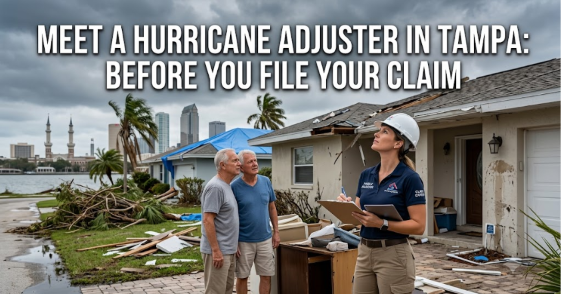
Meet a Hurricane Adjuster in Tampa: Before You File Your Claim
The wind dies down, the water drains away, and then the real work begins. What you do before you call your insurer can shape every conversation that follows.
If a hurricane damaged your home or business, you may be wondering whether to bring in a hurricane adjuster or handle the claim on your own. The honest answer depends on the size of the loss and how well you know your policy.
A public adjuster works only for the policyholder, never for the insurance company. Knowing that difference before you file helps you decide with a clearer head. Here is how the process looks for property owners in Tampa.
Why a Hurricane Claim Feels So Overwhelming
A hurricane can hurt a property in several ways at once. Wind, water, and electrical trouble often show up together, and sorting them into the right categories takes time that most owners simply do not have.
While you are busy keeping your family or business steady, it is easy to overlook a loss. Anything that never makes it onto the claim can end up unpaid.
Mold is a good example of how questions pile up fast. Owners start asking what is covered, how much the claim is worth, who pays, and whether a denial can be appealed. Each of those answers depends on the exact wording of the policy, which is why a calm, careful review matters so much in the early days.
What a Public Adjuster Actually Does
Public adjusters represent policyholders when a property damage claim is settled. Their job is to investigate and analyze the claim from the owner’s side of the table.
A good hurricane adjuster reads your policy closely, documents the damage, and negotiates for the amount your coverage owes you. You can read more about how hurricane damage insurance claims in Florida are handled on the company’s own site.
Where Settlement Offers Can Come Up Short
Many homeowners learn after an offer arrives that the damage runs deeper than the insurer’s estimate. The settlement can land far below what a contractor says repairs will cost.
Flood claims bring their own confusion. Policy wording about what is covered is hard to follow, and insurers may offer less than the real cost of repairs.
Lightning adds a different twist. When there is no fire, the harm usually comes from an electrical surge, and many policies will not pay for losses from a surge that started off the premises. Where it began matters a great deal. For wind and storm losses specifically, the page on storm damage insurance claims covers more detail.
Common Hurricane-Season Losses at a Glance
|
Type of Loss |
What Owners Often Run Into |
| Wind and storm |
Offers that fall well below contractor repair estimates |
|
Flood |
Confusing coverage language and lower-than-expected settlements |
|
Lightning |
Surge damage to electronics, phone systems, and wiring |
| Mold |
Questions about coverage, claim value, and denials |
Before You File: A Few Smart Moves
Safety comes first, always. Once everyone is secure, these steps put you in a stronger spot:
- Document every damaged area, including appliances, electronics, and parts of the building.
- Read the sections of your policy that explain what is covered and what is excluded.
- Write down when the damage happened and how you first noticed it.
- Gather repair estimates from contractors so you can compare them with any offer.
- Ask questions about anything in the policy that does not make sense before you submit.
Filing Alone or Hiring Help?
Handling a claim yourself is a fair choice in some cases. If the damage is minor, clearly covered, and you feel comfortable with the policy, an adjuster may not add much. You also avoid paying a fee.
The trade-off is time and effort. You will handle the documentation, the policy reading, and every negotiation with the insurer directly, usually while repairs and daily life pile up around you.
Working with a public adjuster feels different because the load is shared. You stay in charge of decisions about your own property, and the adjuster takes on the detail work, the paperwork, and the back-and-forth that can wear a person down. Think of it as a partnership where each side handles what it does best, so your attention stays on rebuilding.
Who Benefits Most From Professional Help
Not every owner needs an adjuster, so it helps to match the choice to your situation:
- Widespread damage: When many parts of a property are affected, the full loss is harder to measure.
- Business owners: Equipment or system damage can mean lost revenue, which makes careful documentation matter more.
- Low offers: If a settlement sits far below your contractor’s number, an independent review can help.
- Policy confusion: A line-by-line reading can clear up coverage before you make big decisions.
How Compass Claim Solutions Partners With You on a Claim
The process starts with a free consultation. The team reviews your policy and what happened, then tells you honestly whether hiring a hurricane adjuster in Tampa makes sense. If it does, they inspect the property and document areas the insurer’s adjuster may have missed or undervalued.
From there, the policy is read line by line to find out what you are entitled to, not just what a first offer assumes. A detailed claim package follows, often with contractor or engineer estimates that reflect the true cost of repair or replacement.
Compass Claim Solutions then deals with your insurance company directly and negotiates for the full amount your policy owes. Once a fair settlement is reached, you are paid, and the fee comes out of that recovery, never before it.
Common Questions Owners Ask
How long does a hurricane claim take to settle?
There is no fixed timeline. It depends on how extensive the damage is, how much documentation your insurer asks for, and how the negotiation goes.
Do I need help if my flood claim looks simple?
Even a claim that looks straightforward can be underpaid, so a second look at the damage and the policy is worth considering. More answers are on the FAQs page.
Support in Tampa and Across Florida
The Compass Claim Solutions team has extensive experience representing policyholders in the Greater Tampa Bay area and throughout Florida. Their work covers home and business claims, from storm and flood to fire, mold, lightning, and theft.
If you want to learn about public insurance adjuster services in Florida, that page is a good next stop.
Final Thoughts
Before you file, take time to document the damage, read your policy, and compare any offer against real repair estimates. If the process starts to feel like too much, a hurricane adjuster in Tampa can carry the paperwork and the negotiation while you focus on your family or business.
A free consultation costs nothing, and you can get in touch here or call (352) 502-5928 to talk through your options.