


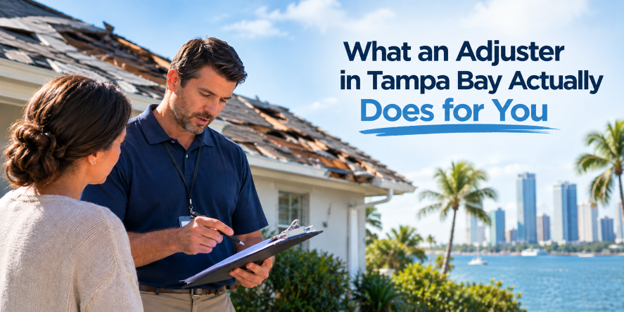
Behind the Claim: What an Adjuster in Tampa Bay Actually Does for You
A single number on a settlement letter can mean the difference between a fully repaired roof and a patch job that starts leaking again next season. That number rarely shows up by luck. It comes from the person doing the adjusting.
If you’ve filed a property claim, you’ve probably heard the word “adjuster” more times than you can count, without anyone explaining what the person does.
Here’s the plain version: an adjuster inspects your damage, interprets your policy, and puts a dollar figure on your loss. That figure shapes everything after it, from the size of your check to how long the ordeal drags on.
Compass Claim Solutions works alongside Tampa Bay property owners through this process, and this piece walks through what the role really involves.
What “Adjuster” Actually Means
Strip away the jargon and an adjuster’s job comes down to three things: inspect, interpret, negotiate. They walk the property, they read the fine print most homeowners skim past, and they argue for a number that reflects the real cost of putting things back together.
Not every adjuster answers to the same boss, though. Some work for the insurance company, reviewing the claim from the carrier’s side. Others, often called public adjusters, work for the property owner, paid only once the claim settles. Same toolkit, different loyalties.
What an Adjuster Tampa Bay Homeowners Work With Actually Handles
Ask someone what an adjuster does, and you’ll usually get “they look at the damage.” True, but incomplete. The job runs from the first policy read to the final signature, touching the policy language, the inspection, the estimate, the paperwork, and the back-and-forth with the carrier along the way.
Skip a line in the policy or miss a corner of water damage during inspection, and the final number can shrink fast, often without the homeowner ever seeing it happen.
Reading Damage the Way an Adjuster Does
No two losses get inspected the same way. A hurricane claim means checking the roof, the siding, the windows, and whatever water made its way in after the wind died down. A fire claim means looking past the obvious char marks to the smoke and soot damage that’s quietly ruined drywall and fabric throughout the house.
Mold claims get tricky fast, because the source of the moisture often decides whether the loss is even covered. Lightning is its own puzzle too. The visible damage might be nothing, while a surge quietly fries the wiring, the appliances, or the electronics somewhere else in the house. Sorting out what actually happened, and proving it, takes a trained eye and a fair amount of patience.
Getting the Insurance Company to Listen
Here’s where a lot of homeowners hit a wall. The inspection is done, the documentation is filed, and now someone has to get the insurance company to agree to a fair number. Carriers ask for more paperwork, question the math, or open with an offer that wouldn’t cover half the repair.
An adjuster Tampa Bay who knows this terrain keeps the conversation moving. They answer requests fast, push back on lowball offers with documentation to back it up, and keep the property owner in the loop instead of guessing.
Why Claims Stall
Claims rarely move in a straight line. Missing documentation is the most common holdup, since a few missing photos or a thin repair estimate send the file back for more information. Disagreements over how the policy language applies cause delays too, especially when a type of damage sits in a gray area.
Estimate mismatches between the carrier’s number and a contractor’s number add friction as well, and after a major storm, the sheer volume of claims across the region can slow everyone down simply because there are only so many adjusters and hours in a day.
Keeping Your Own Paper Trail
Whoever ends up handling the adjustment, staying organized on your end makes the whole process smoother:
- Keep copies of everything submitted to the insurance company
- Take dated photos of the damage before repairs start
- Log every call, including the date and who you spoke with
- Save receipts for any temporary repairs or emergency work
- Get written confirmation of anything agreed to verbally
Why Partnering With Compass Claim Solutions Changes the Outcome
This is the part that matters most: who’s actually in your corner. Partnering with Compass Claim Solutions means the adjuster Tampa Bay property owners rely on is working for you, not for the carrier writing your check. The policy gets read line by line, the property gets inspected in full, and the negotiation happens on your behalf from start to finish.
That’s a different kind of partnership than the one you get by default when a claim gets filed, and it’s worth understanding before you’re standing in a damaged living room deciding what to do next. Contact us to find more detail on how the process runs, start to finish, through a free consultation.
The Bottom Line
An adjuster’s decisions shape a claim from the first inspection to the last dollar on the settlement.
Knowing what the role actually involves, and whose side it’s working for, puts you in a much better position from day one. That’s the value a real partnership brings to a process that can otherwise feel like it’s happening to you instead of for you.